





Session

 Dr.
Dr.10/ 3(Sat)
15:15 - 16:45
Hall C
Session 1
Mastering Direct Composite
― From Aesthetics to Function ―
Mastering Direct Composite
― From Aesthetics to Function ―
This session integrates aesthetics, function, and minimally invasive principles in direct composite dentistry, demonstrating how bio-emulation and anatomical understanding can enhance both anterior and posterior restorations, while introducing structured approaches and modern techniques to achieve predictable, natural, and long-lasting outcomes.

Moderator & Lecturer
Bio-Emulation Smiles: Sculpting Anterior Teeth Through Form, Harmony, and Direct Composite
Bio-Emulation Smiles: Sculpting Anterior Teeth Through Form, Harmony, and Direct Composite
- Aesthetic philosophy applied to anterior tooth form, proportion, and harmony
- Bio-Emulated composite layering strategies for natural depth and light behavior
- Clinical execution principles for precise layering, sculpting and finishing
- Aesthetic philosophy applied to anterior tooth form, proportion, and harmony
- Bio-Emulated composite layering strategies for natural depth and light behavior
- Clinical execution principles for precise layering, sculpting and finishing
The session explores how harmony, symmetry, and controlled imperfection define beauty in the anterior segment, and how these principles are translated into direct composite restorations. Morphology-driven layering strategies are presented to emulate dentin and enamel architecture, while disciplined clinical execution ensures clarity, depth, and continuity with the natural dentition,
By uniting aesthetic philosophy with practical technique, this lecture offers a thoughtful framework for sculpting anterior smiles that feel natural, balanced, and timeless.
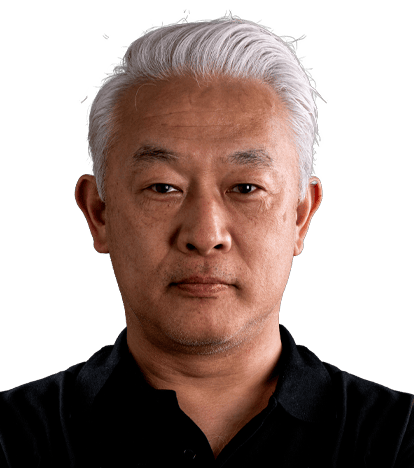

Lecturer
Molar Anatomy for Function
― An Anatomical Approach to Transform Direct Posterior Restorations ―
Molar Anatomy for Function
~ 臼歯部直接修復を変える解剖学的アプローチ ~
- Anatomical analysis of molar morphology
- Functional morphology based on occlusal anatomy
- Key considerations for long-term success in direct restorations
- Direct restorations inspired by natural tooth anatomy
- 臼歯部形態の分析
- 解剖学的形態から考える「機能する形態」
- 長期予後を意識した充填の勘所
- 天然歯を模倣したダイレクトレストレーション


Lecturer
Aesthetic and functional management of tooth wear using direct composite and the stamp technique.
Aesthetic and functional management of tooth wear using direct composite and the stamp technique.
- Identify pathological tooth wear and determine when minimally invasive, adhesive rehabilitation is indicated.
- Perform structured treatment planning for worn dentitions using diagnostic wax-ups, mock-ups, and clinical documentation.
- Differentiate between freehand composite modelling, the IMT technique, and the Stamp technique, including their indications and limitations.
- Apply step-by-step clinical protocol to accurately translate a diagnostic wax-up into functional and aesthetic direct composite restorations using the stamp technique.
- Knowledge of the longevity of direct composite restorations placed for treatment of tooth wear with a conventional small particle hybrid composite.
- Identify pathological tooth wear and determine when minimally invasive, adhesive rehabilitation is indicated.
- Perform structured treatment planning for worn dentitions using diagnostic wax-ups, mock-ups, and clinical documentation.
- Differentiate between freehand composite modelling, the IMT technique, and the Stamp technique, including their indications and limitations.
- Apply step-by-step clinical protocol to accurately translate a diagnostic wax-up into functional and aesthetic direct composite restorations using the stamp technique.
- Knowledge of the longevity of direct composite restorations placed for treatment of tooth wear with a conventional small particle hybrid composite.
Successful treatment requires structured planning with study models, photographs, and a diagnostic wax_up with mock_up to guide the final result. Experienced clinicians may use freehand composite modelling for mild to moderate wear, relying on strong knowledge of tooth morphology. For most practitioners, guided techniques provide greater predictability. The Injection Moulding Technique technique uses a highly filled flowable composite, while the Stamp technique employs a small particle hybrid composite. Both rely on a transparent silicone index for precise reproduction of the wax_up. This webinar focuses on the stamp technique, discussing indications, materials, clinical steps, advantages, limitations, and expected longevity.